

+44 7853 968135
How to replace guttering yourself, is it worth it?

Replacing guttering yourself is possible for single storey, easily accessible sections using modern clip fit uPVC systems, but for anything at height or multiple storeys, the access risks generally outweigh the savings versus a roofer. Modern systems have made the components more DIY friendly, but getting up there safely is the real challenge. We’ll cover difficulty, typical costs, and a tip that’s often overlooked.
Is it easy to replace guttering yourself
The components themselves are genuinely fairly straightforward, modern uPVC guttering uses clip fit brackets and sections that don’t require specialist tools, and many builders’ merchants sell complete kits with brackets, lengths, and fittings designed for straightforward installation.
Where it gets harder is ensuring correct falls so water flows towards the downpipes rather than pooling, and working safely at height for the duration of the job, which for a full house typically takes considerably longer than people expect.
How difficult is it to replace your own gutters
For a single storey extension or outbuilding with good ground access, a competent DIYer with the right ladder setup might manage guttering replacement reasonably well. The main challenges are getting brackets level and correctly spaced, and ensuring joints are properly sealed.
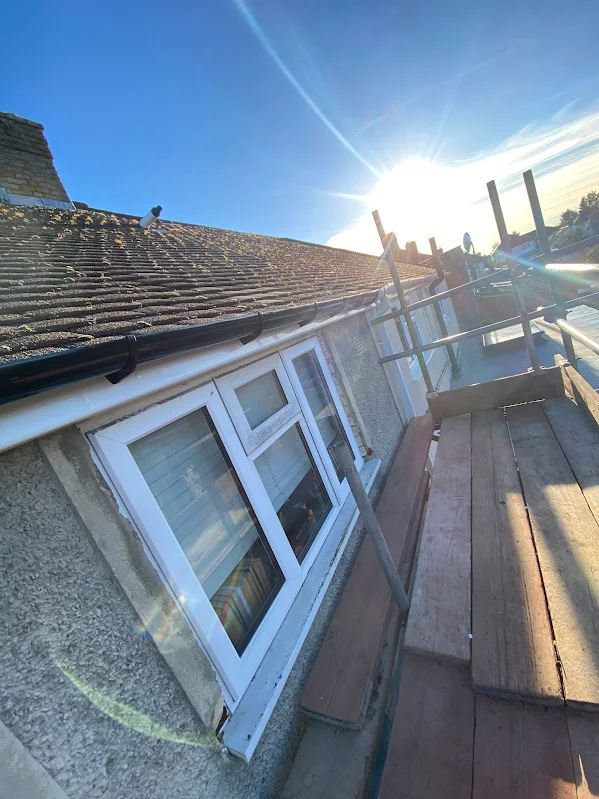
For a full two storey house, the difficulty increases significantly, both in terms of access and the sheer time involved working at height around the entire roofline. This is where most people find the balance tips towards calling a roofer.
Need some Guttering support? Speak with a member of our professional guttering team here
How much should it cost to replace guttering
For a professionally fitted uPVC guttering replacement on a typical semi-detached house, costs generally range from £600 to £1,500, depending on the length of guttering, number of downpipes, and access requirements.
DIY materials for the same job might cost a few hundred pounds, but factor in any access equipment hire if you don’t already have suitable ladders, plus your own time, when weighing up the real saving versus having it professionally fitted.
What is the little known trick for gutters
One often overlooked detail is ensuring gutter brackets are spaced correctly and that the gutter has a slight fall, roughly 1cm drop for every few metres, towards the downpipe. Without this fall, water sits in the gutter rather than draining properly, leading to overflow and quicker deterioration.
Another tip professionals use is fitting gutter outlets and downpipes first, then working back towards the high point, which makes it easier to maintain a consistent fall throughout rather than guessing and adjusting brackets afterwards.
When DIY guttering makes sense
DIY guttering replacement tends to make most sense for single storey structures with safe, easy ground level access, like a garden shed, garage, or single storey extension, where the consequences of a mistake are lower and access is straightforward.
If you’re confident with basic DIY, have suitable access equipment, and the section involved is genuinely low risk, it can be a reasonable weekend project. The key is being honest about your own access setup and not pushing into territory that needs proper roofing access equipment.
When it’s better to call a roofer
For full house guttering, anything at height beyond a single storey with safe ground access, or if you’ve noticed sagging sections suggesting wider fascia issues, a roofer brings the right access equipment and experience to do the job efficiently and safely.
| Scenario | DIY or Professional |
|---|---|
| Single storey shed/garage | DIY often reasonable |
| Single storey extension | DIY possible with care |
| Full two storey house | Professional recommended |
| Sagging gutters/fascia issues | Professional assessment advised |
A roofer can also spot related issues, like fascia condition, while they’re up there, which is harder to assess from a DIY perspective.
Replacing guttering yourself can work for smaller, low level jobs, but the real cost of a full house job often comes down to safe access rather than the guttering itself. If you’re at all unsure, getting a roofer to quote costs nothing and gives you a clear comparison against doing it yourself.
Need some Guttering support? Speak with a member of our professional guttering team here
Frequently Asked Questions
How to replace guttering yourself, is it worth it?
It can be worth it for small, single storey, easily accessible sections, but for full house guttering the access challenges often outweigh the savings.
Is it easy to replace guttering yourself?
The components are fairly straightforward with modern clip fit systems, but getting correct falls and safe access at height is the harder part.
How difficult is it to replace your own gutters?
For single storey, ground level accessible areas it’s manageable for a confident DIYer, but full house guttering is significantly more challenging.
How much should it cost to replace guttering?
Professionally, typically £600 to £1,500 for a semi-detached house, depending on length and access.
What is the little known trick for gutters?
Ensuring a slight fall towards the downpipe, roughly 1cm per few metres, and fitting outlets first before working back along the run.
What guttering material is most common in the UK?
uPVC is the most common modern choice due to its low maintenance and ease of installation compared to older cast iron systems.
Why do gutters overflow even when clear of debris?
This is often due to incorrect fall, meaning water doesn’t drain efficiently towards the downpipe even without blockages.
How often should guttering be cleared?
Twice a year is a sensible general guide, more often if there are overhanging trees that drop leaves regularly.
Can guttering be replaced without removing fascias?
Often yes for a straightforward swap, though if fascias are also due for replacement, doing both together is usually more efficient.
What tools are needed for DIY guttering replacement?
Basic tools like a hacksaw for cutting lengths, a spirit level for checking falls, and a suitable ladder or access equipment for the height involved.
How do I know if my guttering needs replacing rather than repairing?
Widespread cracking, sagging sections, or guttering that’s pulling away from fascias in multiple places usually points to replacement rather than patch repairs.
Does guttering need planning permission to replace?
No, like for like guttering replacement is considered routine maintenance and doesn’t require planning permission.
Can I match new guttering to my existing downpipes?
Usually yes, as long as the new guttering is a compatible profile, though older or unusual profiles may need specific matching parts.
Should guttering be checked during a roof inspection?
Yes, guttering condition is often checked alongside other roofline elements like fascias and soffits during a general roof inspection.
The discussion is relevant when comparing different trading approaches.
crypto market analysis