

+44 7853 968135
What is the most expensive part of replacing a roof?

Replacing a roof is one of the most significant home improvement costs a UK homeowner will ever face. Whether your roof has started to leak, your tiles are visibly deteriorating, or a surveyor has flagged structural concerns, the question most people ask first is a practical one: where does all the money actually go?
The honest answer is that labour consistently accounts for the largest single portion of any roof replacement bill. That said, the full picture is more nuanced, because materials, roof size, pitch, and the condition of the underlying structure all stack up quickly, and understanding each element helps you make smarter decisions before you sign anything.
How Much Does It Cost to Replace an Entire Roof in the UK?
The cost of a full roof replacement in the UK varies considerably depending on property size, roof complexity, and the materials chosen. As a general guide, a typical three-bedroom semi-detached house with a standard pitched roof will cost somewhere between £5,000 and £12,000 for a full replacement using concrete or clay tiles. Larger detached homes, complex roof shapes, or premium materials such as natural slate can push costs well above £15,000.
It is worth remembering that these figures cover the full scope of work: stripping the old roof covering, inspecting and replacing damaged timbers, fitting new felt and battens, laying the new tiles or slates, and finishing the ridge and any lead flashings. A quote that seems dramatically lower than this range should prompt questions rather than excitement.
| Property Type | Approximate Roof Area | Estimated Full Replacement Cost (UK) |
|---|---|---|
| One-bedroom flat/maisonette | 30–50 m² | £2,500–£5,000 |
| Two-bedroom terraced house | 50–70 m² | £4,000–£8,000 |
| Three-bedroom semi-detached | 70–90 m² | £5,500–£12,000 |
| Four-bedroom detached | 90–130 m² | £9,000–£18,000 |
| Large detached/complex roof | 130 m²+ | £15,000–£30,000+ |
Need some Support with your Roof Replacement? Speak with a member of our Professional Roof Replacement Team here
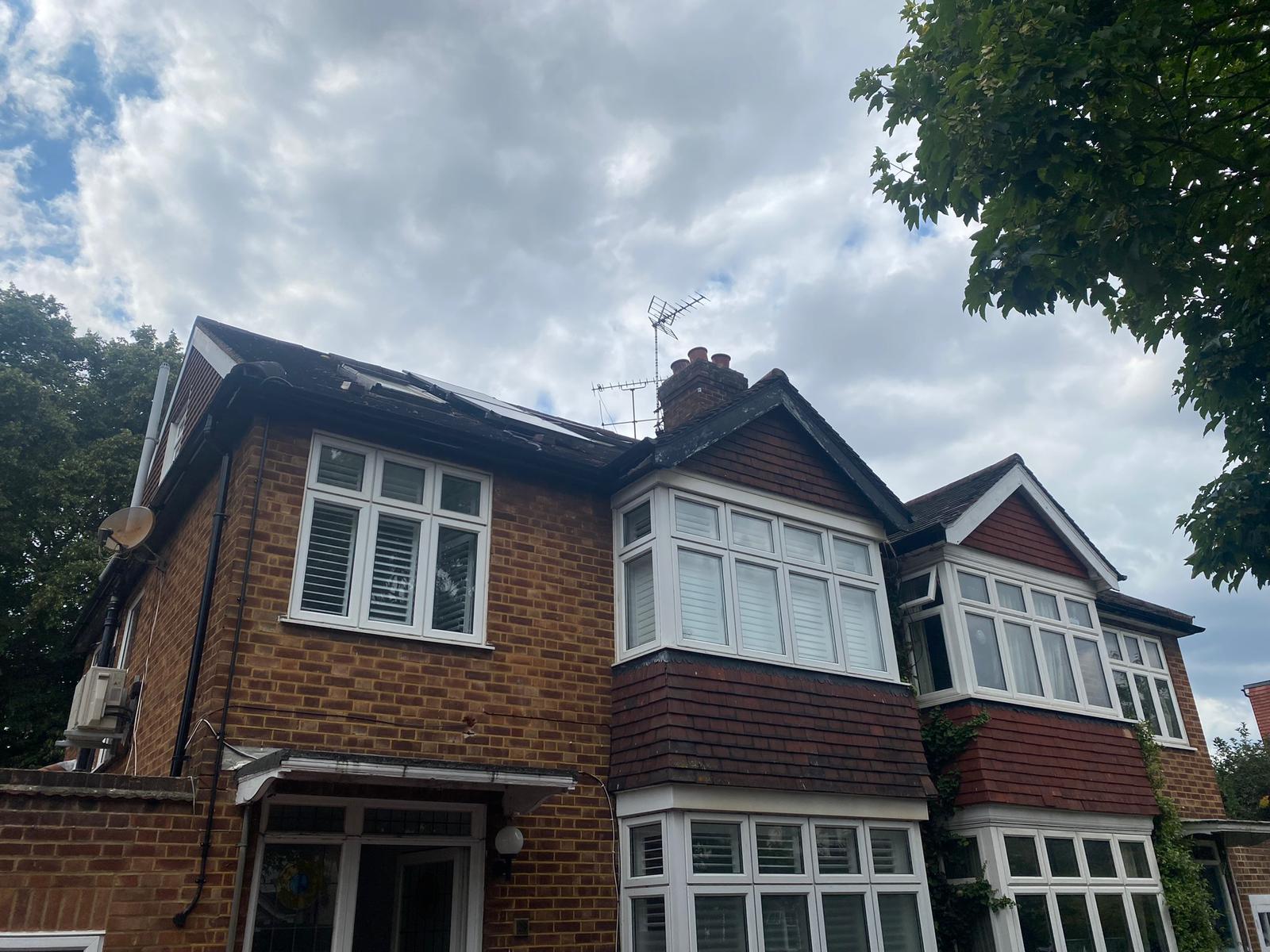
Materials represent the second major cost driver in a roof replacement. The type of covering you choose has a significant impact on the overall bill, and the quality of ancillary materials such as felt, battens, ridge tiles, lead, and fixings matters just as much as the primary covering itself. Choosing a cheaper tile to save money upfront, while cutting corners on the underlayer, is a false economy that often leads to problems within a few years.
The table below illustrates how material choices affect overall project costs for a typical three-bedroom semi-detached house.
| Roof Material | Average Material Cost (3-bed semi) | Typical Lifespan | Notes |
|---|---|---|---|
| Concrete interlocking tiles | £1,200–£2,500 | 40–60 years | Most common choice; cost-effective |
| Clay plain tiles | £2,000–£4,000 | 60–100 years | Traditional look; heavier than concrete |
| Natural Welsh slate | £3,500–£7,000 | 80–150 years | Premium finish; strong resale value |
| Synthetic slate | £2,500–£5,000 | 30–50 years | Lighter than natural slate; mixed reviews |
| Flat roof (EPDM rubber) | £1,500–£3,500 | 25–40 years | Common for extensions and garages |
Is £30,000 Too Much to Pay for a New Roof in the UK?
For most standard UK properties, a quote of £30,000 for a roof replacement would sit at the higher end of the spectrum. That said, it is not automatically a red flag. On a large detached house with a complex multi-pitched roof, natural slate as the specified material, full timber repairs, bespoke lead work, and a scaffolding requirement spanning several weeks, a figure in that range can be entirely legitimate.
Context is everything. A £30,000 quote for a modest terraced house with a simple pitched roof and concrete tiles would warrant serious scrutiny and at least two or three alternative quotes. Always ask for a full written breakdown showing labour, materials, scaffolding, and VAT separately, so you can compare like for like rather than comparing headline totals.
Protecting Yourself: Planning Permission and Quality Standards
Before any roof replacement begins, it is worth understanding your obligations as a homeowner. In many cases, a straight like-for-like replacement does not require planning permission under permitted development rights, but if you are changing the roof’s appearance, adding a dormer, or working on a listed building, permission will be required. You can check your specific situation via the Planning Portal, which provides clear guidance on permitted development rules for roof work in England.
For quality assurance, the government-backed TrustMark scheme registers vetted tradespeople who have been assessed for technical competence and customer service standards. Choosing a TrustMark-registered roofer gives you an additional layer of consumer protection and confirms the contractor operates to a recognised standard.
How to Tell If You Have Hired a Dodgy Roofer
Spotting a rogue trader in the roofing industry is not always straightforward, but there are consistent warning signs that experienced homeowners and trading standards bodies have identified over many years. A contractor who arrives uninvited and claims to have spotted urgent damage from the street, who asks for a large cash payment upfront, or who cannot provide a written quote or proof of public liability insurance should be treated with real caution. Pressure selling and vague verbal promises are two of the clearest indicators that something is not right.
Once work has started, there are further signs to watch for. Legitimate roofers will not object to you checking their work at agreed stages, and they will provide receipts for materials if asked. A rogue trader typically works fast, uses poor-quality or mismatched materials, avoids paperwork, and disappears quickly after payment. Checking reviews on independent platforms, asking for references from previous clients, and verifying membership of a recognised trade body such as the National Federation of Roofing Contractors (NFRC) all significantly reduce the risk of being caught out.
What Is the Most Expensive Part of Replacing a Roof: The Full Picture
Understanding where your money goes on a roof replacement project puts you in a far stronger position as a homeowner. Labour will almost always be the largest single cost, followed by materials, with scaffolding, skip hire, and VAT rounding out a bill that can feel substantial but, on a well-specified job by a competent contractor, represents genuine long-term value for your home.
Getting multiple quotes, understanding what each one includes, and choosing a contractor you have properly vetted are the steps that matter most. A roof is not a purchase you make twice in a generation if it is done correctly the first time, and the difference between a well-executed replacement and a poor one is often not the price paid but the care taken in choosing who carries out the work.
The fear of overpaying is entirely reasonable, but the far more common and costly mistake is underpaying for a job that later fails. Take the time to understand your roof, your options, and your contractor before committing to anything in writing.
Need Help with Roof Replacement? Talk to one of our Professional Roof Replacement Experts today!
What Is the Most Expensive Part of Replacing a Roof: Frequently Asked Questions
What is the most expensive part of replacing a roof?
Labour is consistently the most expensive element, typically making up between 40% and 60% of the total project cost. Materials, scaffolding, and ancillary work such as timber repairs add to this but rarely exceed the labour component on their own.
How much does it cost to replace an entire roof in the UK?
For a typical three-bedroom semi-detached property, a full replacement costs between £5,500 and £12,000 depending on materials and roof complexity. Larger or more complex properties can cost significantly more, with some projects reaching £20,000 or beyond.
Is natural slate worth the extra cost?
Natural slate carries a higher upfront cost than concrete tiles but offers a lifespan of 80 to 150 years and adds demonstrable value to a property. For many homeowners, particularly those in conservation areas or with period properties, it is the most cost-effective long-term choice.
Do I need planning permission to replace my roof?
A like-for-like replacement generally falls under permitted development and does not require planning permission in England, though different rules apply to listed buildings and conservation areas. The Planning Portal provides free guidance to help homeowners confirm their position before work begins.
What does scaffolding add to the overall cost?
Scaffolding typically adds between £800 and £2,500 to a roof replacement project depending on the size of the property and how long it is required. It is a non-negotiable safety requirement for any reputable contractor working on a pitched roof.
How can I tell if a roofing quote is fair?
Request an itemised written quote that separates labour, materials, scaffolding, and VAT, then compare at least three quotes on the same specification. A reputable contractor will be happy to explain every line item and will not pressure you to commit quickly.
What is a dodgy roofer and how do I spot one?
A dodgy roofer is a contractor who uses high-pressure tactics, demands large upfront cash payments, or cannot provide written quotes or proof of insurance. For a broader overview of roofing materials and construction methods, the Wikipedia article on roofing is a useful starting point.
Is £30,000 too much for a roof replacement in the UK?
For a large detached property with a complex roof, premium materials, and full timber repairs, £30,000 can fall within a legitimate range. For a standard semi-detached with concrete tiles, that figure would be very high and should prompt you to obtain additional quotes immediately.
Why do roof replacement costs vary so much between contractors?
Differences in labour rates, the quality of materials specified, the extent of preparatory work included, and regional pricing all contribute to significant variation between quotes. This is why comparing itemised quotes rather than headline totals is so important.
How long does a full roof replacement take?
Most standard residential roof replacements take between three and seven working days, though complex roofs or those requiring extensive timber repairs can take longer. Weather also plays a role, as reputable roofers will not lay tile or felt in wet or icy conditions.
What is breathable felt and why does it matter?
Modern breathable roofing felt allows moisture vapour to escape from the roof structure while preventing water ingress, reducing the risk of condensation and timber rot. Its use should be explicitly stated in your quote, as any reputable roofer should be fitting current specification felt as standard.
Are roof replacements subject to VAT?
Most roofing work carried out by a VAT-registered contractor is subject to standard rate VAT at 20%, so ensure you confirm whether your quote is inclusive or exclusive of tax. A contractor who insists on cash only and does not mention VAT may not be operating legitimately.
Should I use a contractor registered with a trade body?
Membership of a recognised body such as the National Federation of Roofing Contractors indicates that a contractor has been vetted for technical standards and professionalism. It does not guarantee perfection, but it significantly reduces the risk of poor workmanship.
What is the difference between a roof repair and a full replacement?
A repair addresses specific localised damage such as a handful of slipped tiles or a failed lead flashing, whereas a full replacement strips the entire roof back and installs new materials throughout. If a roofer recommends a full replacement on a relatively young roof, always seek a second opinion before proceeding.