

+44 7853 968135
What are the building regulations for a pitched roof?

Understanding building regulations for pitched roofs is essential for any UK property owner planning construction or renovation work. These regulations ensure structural safety, energy efficiency, and compliance with planning requirements across England, Wales, Scotland, and Northern Ireland.
The complexity of pitched roof regulations encompasses multiple areas including structural design, thermal performance, fire safety, and drainage requirements. Getting these right from the start prevents costly remedial work and ensures your project meets all legal obligations.
What are the building regulations for a pitched roof in the UK?
Building regulations for pitched roofs in the UK are governed primarily by the Building Regulations 2010 in England and Wales, with similar frameworks in Scotland and Northern Ireland. These regulations cover structural integrity under Part A, which requires roofs to safely support their own weight plus additional loads from snow, wind, and maintenance activities.
Part L of the building regulations addresses energy efficiency requirements, mandating specific U-values for roof insulation. For new constructions, the maximum U-value for pitched roofs is typically 0.15 W/m²K, though this can vary depending on the overall building’s thermal performance calculations. Additionally, Part K covers protection from falling, requiring adequate access provisions and safety measures for roof maintenance.
Need some Support with your Pitched Roofing? Speak with a member of our Professional Pitched Roofing Team here
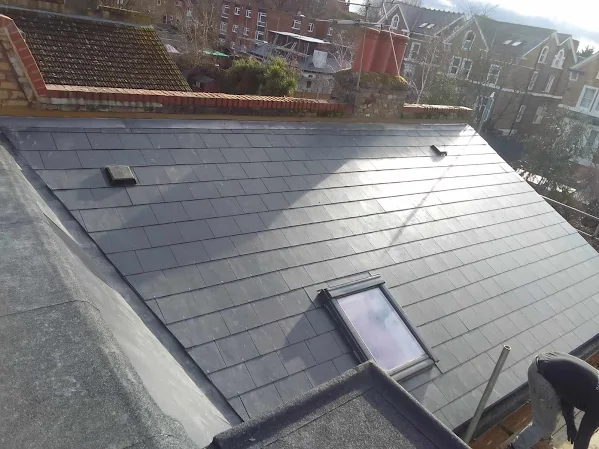
Understanding the pitch rule for roof construction
The pitch rule for roofs fundamentally relates to the minimum angle required for effective water drainage and structural performance. Most building regulations specify a minimum pitch of 15 degrees for tiled roofs, though this can vary depending on the roofing material and local weather conditions.
Steeper pitches generally provide better water shedding and reduce the risk of water penetration, particularly important in areas with high rainfall. However, the specific pitch requirements must also consider wind loading calculations, as steeper roofs can experience greater wind uplift forces that need to be accounted for in the structural design.
British standard specifications for pitched roofs
British Standard BS 5534 provides comprehensive guidance for slating and tiling on pitched roofs, covering installation methods, materials, and performance requirements. This standard specifies minimum laps, fixing requirements, and ventilation provisions that must be followed to ensure weather-tight construction.
BS 8110 and Eurocode 2 govern the structural design aspects of pitched roofs, including loading calculations and material specifications. These standards work alongside building regulations to ensure that pitched roofs meet both safety and performance criteria. The standards also address specific requirements for different roofing materials, from traditional clay tiles to modern synthetic alternatives.
| Roofing Material | Minimum Pitch (Degrees) | Maximum Pitch (Degrees) | Standard Reference |
|---|---|---|---|
| Clay Tiles | 35 | 90 | BS 5534 |
| Concrete Tiles | 15 | 90 | BS 5534 |
| Natural Slate | 20 | 90 | BS 5534 |
| Artificial Slate | 17.5 | 90 | BS 5534 |
| Metal Sheeting | 4 | 90 | BS 5427 |
Golden rule principles for roof pitch design
The golden rule for roof pitch centres on balancing water shedding efficiency with structural considerations and aesthetic requirements. This principle suggests that pitch should be determined by the most restrictive requirement among drainage, material specifications, and local planning constraints.
Weather exposure plays a crucial role in determining optimal pitch angles, with areas subject to driving rain requiring steeper pitches than sheltered locations. The golden rule also emphasises the importance of consistent pitch across roof sections to maintain both visual appeal and performance integrity throughout the structure.
| Exposure Category | Recommended Minimum Pitch | Additional Requirements | Typical Applications |
|---|---|---|---|
| Sheltered | 15° | Standard lap requirements | Urban areas, valleys |
| Moderate | 22.5° | Increased lap by 25mm | Suburban locations |
| Severe | 35° | Dry fix systems required | Coastal, exposed hills |
| Very Severe | 45° | Enhanced fixing density | Extreme coastal exposure |
Meeting UK building regulations for pitched roof compliance
Achieving compliance with UK building regulations for pitched roofs requires careful attention to multiple interconnected requirements that extend beyond basic structural considerations. The UK Government’s planning portal provides detailed guidance on when building regulations approval is required and outlines the submission process for different types of roof work.
Structural calculations must demonstrate adequate load-bearing capacity for both permanent loads (the roof structure itself) and variable loads including snow, wind, and maintenance loads. Part A of the building regulations requires these calculations to follow Eurocode standards, ensuring roofs can safely support a minimum imposed load of 0.75 kN/m² plus appropriate snow and wind loadings based on geographic location and exposure conditions.
Fire safety considerations under Part B become particularly important for pitched roofs, especially regarding the spread of flame across roof surfaces and the provision of adequate escape routes. Materials used must achieve appropriate fire ratings, and roof construction must prevent fire spread between properties. The Building Regulations guidance documents provide specific technical requirements for different construction scenarios, helping ensure full compliance with safety standards.
What are the building regulations for a pitched roof: Key takeaways
Understanding and complying with building regulations for pitched roofs protects both property value and occupant safety while ensuring legal compliance throughout the construction process. The regulatory framework encompasses structural integrity, thermal performance, fire safety, and weatherproofing requirements that work together to create durable, efficient roof systems.
Professional involvement from qualified structural engineers and building control bodies helps navigate the complex regulatory landscape while ensuring all requirements are properly addressed. This collaborative approach reduces project risks and provides confidence that the finished roof will perform effectively throughout its design life.
The investment in proper regulatory compliance pays dividends through reduced maintenance costs, improved energy efficiency, and enhanced property value. Modern building regulations reflect decades of construction experience and technological advancement, creating frameworks that deliver both safety and performance when properly implemented.
Key considerations for pitched roof building regulations compliance:
Need Help with Pitched Roofs? Talk to one of our Professional Pitched Roof Experts today!
What are the building regulations for a pitched roof: Frequently Asked Questions
Do I need building regulations approval for pitched roof work?
Building regulations approval is required for most pitched roof work including new construction, significant repairs, and alterations that affect structural integrity or thermal performance. Minor repairs and like-for-like replacements typically don’t require approval, but it’s advisable to check with your local building control office.
What is the minimum pitch allowed for a tiled roof in the UK?
The minimum pitch for tiled roofs varies by material but typically ranges from 15 degrees for concrete tiles to 35 degrees for clay tiles. These minimums ensure adequate water shedding and comply with manufacturer specifications outlined in BS 5534.
How do building regulations address roof insulation requirements?
Part L of the building regulations specifies maximum U-values for roof thermal performance, typically 0.15 W/m²K for new constructions. Insulation must be continuous and properly detailed to prevent thermal bridging while maintaining adequate ventilation.
What structural calculations are required for pitched roofs?
Structural calculations must demonstrate capacity for dead loads, imposed loads (0.75 kN/m²), snow loads, and wind loads according to Eurocode standards. These calculations consider building location, exposure conditions, and roof geometry to ensure adequate safety margins.
Are there specific requirements for roof access and maintenance?
Part K requires safe access provisions for roof maintenance, including permanent access routes where regular maintenance is anticipated. This may include fixed ladders, walkways, or other safety measures depending on roof design and accessibility requirements.
How do planning permissions relate to pitched roof building regulations?
Planning permission and building regulations are separate requirements that may both apply to pitched roof projects. Planning addresses visual impact and local planning policies, while building regulations focus on construction standards and safety, as detailed on the UK Planning Portal.
What fire safety considerations apply to pitched roofs?
Part B requires appropriate fire resistance ratings for roof materials and construction details that prevent fire spread between properties. This includes specific requirements for roof covering materials, structural elements, and junction details with party walls.
How are wind loading requirements calculated for pitched roofs?
Wind loading calculations follow Eurocode 1 methodologies, considering building location, terrain category, building height, and roof geometry. These calculations determine both uplift forces and pressure loadings that influence structural design and fixing requirements.
What ventilation requirements apply to pitched roof spaces?
Building regulations require adequate ventilation to prevent condensation in roof spaces, typically achieved through eaves and ridge ventilation. The specific ventilation area depends on roof pitch, insulation location, and whether the roof space is used for habitation.
Are there different requirements for listed buildings or conservation areas?
Listed buildings and conservation areas may have additional restrictions on materials and construction methods that must be balanced with building regulations requirements. Early consultation with conservation officers and building control is essential for these properties.
What inspection stages are required during pitched roof construction?
Building control inspections typically include foundation/structure stage, insulation stage, and completion inspection. Additional inspections may be required for complex structures or where specific performance criteria must be verified during construction.
How do building regulations address renewable energy integration?
Modern building regulations encourage renewable energy integration while maintaining structural integrity and weather protection. Solar panel installations must comply with structural loading requirements and may need specific mounting system approvals.
What documentation is required for pitched roof building regulations submissions?
Submissions typically require structural calculations, thermal performance calculations, detailed drawings, and material specifications. The complexity of documentation depends on project scope and whether full plans or building notice procedures are followed.
How do building regulations vary between England, Wales, Scotland, and Northern Ireland?
While the fundamental principles remain consistent, specific requirements can vary between UK nations, with Scotland having its own Technical Handbooks and Northern Ireland following separate building regulations. Always check local requirements with the appropriate building control authority.