

+44 7853 968135
How much does it cost to retile a roof?

Here’s the full blog post with the tables embedded at the right points in the content:
How Much Does It Cost to Retile a Roof in the UK?
Retiling a roof in Surrey or South West London typically costs between £7,000 and £15,000 for an average three-bedroom semi-detached house. That range is wide because no two jobs are the same. The price depends on your roof’s size and pitch, what tiles you’re replacing them with, whether the structure underneath needs attention, and how much scaffolding is required.
If you’ve been given a quote and it feels high, or you’re trying to budget before getting anyone in, here’s a straightforward breakdown of what drives the cost and what you should be expecting.
What a Full Retile Actually Involves
A lot of homeowners think retiling just means pulling the old tiles off and putting new ones on. In reality, a proper retile strips the roof back to the rafters. That means removing all existing tiles, taking off the old roofing felt (which on most properties we see in Surrey is decades old and well past it), replacing the timber battens, laying new breathable membrane underlay, and then tiling back up.
On Victorian terraces and 1930s semis, it is also common to find that some of the sarking boards or rafters have taken moisture damage over the years. That gets picked up once you strip back, not before. Any roofer who gives you a fixed price without noting the possibility of structural timber repairs is leaving something out of their quote.
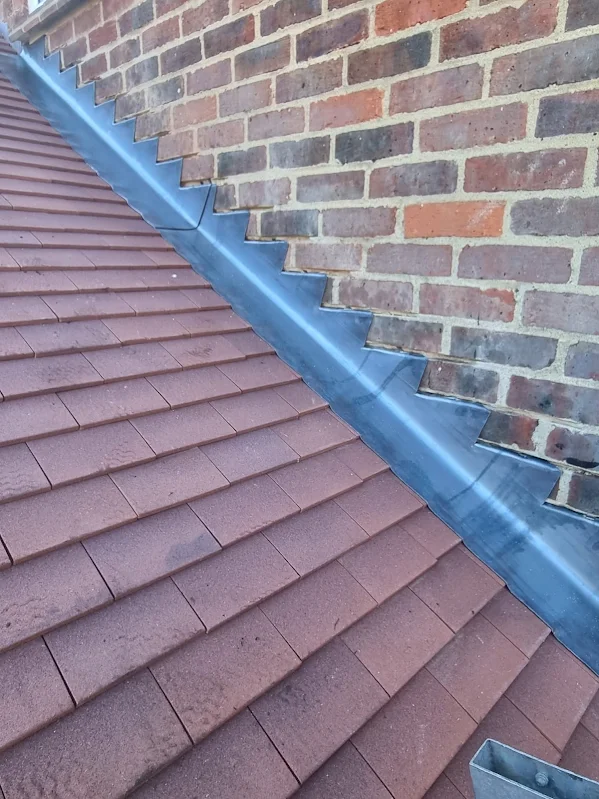
Hips, valleys, and ridge work all add labour time. A plain gable-end roof is the simplest job. A hipped roof with valleys is significantly more involved. This is worth bearing in mind when comparing quotes, because two roofs of identical square footage can have very different levels of complexity.
Need some Support with your Roof Tiling? Speak with a member of our Professional Roof tiling Team here
How Much Does a Retile Cost by Property Type?
| Property type | Approx roof area | Typical cost range |
|---|---|---|
| Small terraced house | 45–60 m² | £4,500 – £7,000 |
| 3-bed semi-detached | 60–80 m² | £7,000 – £12,000 |
| 4-bed detached | 80–120 m² | £11,000 – £18,000 |
| Period / Victorian terrace | Varies | Add 15–30% for slate matching, lead, or hip complexity |
Figures reflect Surrey and South West London labour rates. Scaffolding, underlay, and batten replacement included. All costs exclude VAT.
These are not ceiling prices. A hipped roof at the larger end of any category, on a busy road requiring a pavement licence, tiled in natural slate, will exceed these figures. They are a realistic starting point for budgeting, not a guarantee.
What Affects the Final Price
Roof size and pitch. The bigger the roof, the more materials and labour. Steeper pitches take longer to work safely and require more careful tiling to maintain proper overlap.
Tile choice. Concrete interlocking tiles are the most cost-effective option and work well on post-war properties. Clay plain tiles are better suited to period homes and last considerably longer, but cost more to supply and lay because they require closer batten spacing and more tiles per square metre. Natural slate carries the highest material cost but is the appropriate choice for most Victorian properties in South West London, particularly in conservation areas where planning conditions may require matching the original material.
Scaffolding. This is one of the most significant variables in any retiling quote. A standard semi-detached with straightforward access might need a basic scaffold for a week. A terraced property on a busy road in Clapham or Kingston, where a pavement licence is required, or a house with a conservatory or awkward lean-to at the rear, can push scaffold costs up considerably. Some roofers include this in their overall price; others quote it separately. Always clarify.
Structural condition. If the battens are rotten, the felt is perished and has been letting in moisture, or there is any movement in the ridge or hip timbers, those all add cost. What we tend to see on Surrey properties built before 1960 is that the original felt has completely broken down. Sometimes it is nothing more than dust by the time it gets stripped off. That is not unusual, but it does mean underlay replacement is not optional.
Insulation. If you are retiling and the roof space has no insulation, or only the old fibreglass quilt laid between the joists, it is worth considering whether to upgrade at the same time. Building regulations under Approved Document L do not necessarily require you to upgrade insulation as part of a retile, but the NHBC and most energy assessors recommend using the opportunity while everything is stripped back.
Which Tile Material Should You Choose?
| Material | Cost per tile (supply) | Lifespan | Best suited to |
|---|---|---|---|
| Concrete interlocking | £0.80 – £1.50 | 40–60 years | Post-war semis, modern builds |
| Clay plain tile | £1.00 – £1.60 | 60–100 years | Victorian terraces, period properties |
| Natural slate | £2.00 – £4.50 | 80–150 years | Period homes, conservation areas |
| Reclaimed slate/tile | £1.50 – £3.50 | Depends on age/grade | Listed buildings, matching originals |
Supply costs only. Fitting adds labour on top. A full retile also includes felt, battens, and ridge work, none of which are captured in the per-tile figure.
Tile choice affects both the upfront cost and the long-term performance of the roof. On a 1930s semi in Surrey, concrete interlocking tiles are a perfectly decent choice and will give you decades of reliable service. On a Victorian terrace in Wimbledon or Balham, concrete tiles will look wrong, and in some conservation areas they will not be permitted. Natural slate or matching clay is the correct material for those properties, and the higher cost reflects that.
Reclaimed tiles are worth considering on listed buildings or where you need to match an original. The quality varies significantly depending on source and grade, so it is worth knowing where the material is coming from before committing.
Why Quotes Can Vary So Much
It is not unusual to get two or three quotes for the same job and find a difference of £4,000 or £5,000 between them. Some of that gap is down to different tile specifications. A quote for concrete tiles will always come in lower than one for matching reclaimed clay. Some of it is down to how scaffolding is being handled. And some of it is simply different assumptions about what the job involves.
A low quote that does not mention felt replacement or batten replacement is not a better deal. It is an incomplete scope of work. You will either end up with a roof that fails sooner than it should, or you will get hit with a variation once the job starts and the roofer uncovers what was always going to be there.
Get a minimum of three quotes and make sure each one specifies what is included in writing. The most useful thing you can do before getting anyone on site is to know the approximate square footage of your roof and have a sense of what tiles are currently on it.
The MSE Forum Question: Is £21,000 to £23,000 for a 3-Bed Semi in South London Reasonable?
A post on the Money Saving Expert forum put this exact scenario to the community. The homeowner had worked out their own cost breakdown for a hip-ended roof re-covering in South London: roughly £1,000 for a skip, £1,500 for scaffold, £4,000 for tiles and materials, and £2,000 for labour, expecting around £10,000 all in. Two contractors quoted £21,000 and £23,000 respectively.
Neither figure is automatically wrong, but both warrant scrutiny.
The homeowner’s scaffolding estimate was significantly too low. In South London, erecting a scaffold on a hipped roof takes more steel than a simple lean-to, and if a highway licence or pavement protection is required the cost goes up further. A realistic scaffold allowance for a mid-terrace with hips in that area would be closer to £3,000 to £4,500 depending on access.
The labour estimate of £2,000 is also well below what a quality roofing team would charge. A hipped roof retile is a multi-day job for two roofers. At realistic day rates for South London, labour alone on a hip-end 3-bed is going to be closer to £4,000 to £6,000.
That said, £21,000 to £23,000 sits at the upper end. If those quotes include felt, battens, ridge, full scaffold, and all disposal, and if the tiles specified are clay rather than concrete, they are not necessarily extortionate. But you should be pushing both contractors for a fully itemised breakdown. If either quote cannot tell you exactly how much the scaffold costs, what the tile specification is, and whether batten and felt replacement are included, that is a problem regardless of the total figure.
Should You Retile or Just Repair?
This is the question that comes up most often, and the honest answer is that it depends on the age and condition of what is already there.
If your roof is more than 50 to 60 years old and has never been fully stripped and re-felted, you are likely to spend more over the next decade on repeated repairs than you would on a single retile. Tiles come loose, ridge beds fail, individual slates crack, and each callout costs money. What we tend to see is that by the time a homeowner has had three or four repair visits in as many years, the cumulative spend starts to approach the cost of doing the job properly.
If the roof is 20 or 30 years old and the tiles are generally in good shape, selective repair is the right approach. You are not retiling a roof in reasonable condition just because a handful of tiles have slipped.
A decent roofer will give you an honest read on this after an inspection. Be wary of anyone who recommends a full retile on a roof that looks broadly sound, and equally wary of anyone who patches a roof that clearly needs stripping back.
Key Takeaways
Retiling a roof is a significant spend, and the gap between quotes can make it feel harder to know what is fair. The most useful thing you can do is understand what should be in the quote, ask direct questions about what is and is not included, and make sure you are comparing like for like across different contractors.
In Surrey and South West London, labour rates are higher than the national average. Scaffold costs on terraced streets or busier roads are higher than on a quiet cul-de-sac. Both of those things are legitimate cost drivers and should be reflected in any realistic quote.
Need Help with Tile Roofing? Talk to one of our Professional Tile Roofing Experts today!
FAQ
How much does it cost to retile a roof in the UK?
For most three-bedroom houses, the cost sits between £7,000 and £15,000. Prices in Surrey and South West London tend to be at the higher end of that range due to local labour rates and scaffold costs.
What is the difference between retiling and reroofing?
Retiling generally refers to replacing the tiles along with the felt and battens underneath. Reroofing can mean the same thing or, in some cases, may include structural work to rafters or sarking. Make sure any contractor is clear about exactly what their quote covers.
How long does it take to retile a roof?
A standard three-bedroom semi-detached usually takes three to five days for the tiling work once scaffold is up. A hipped roof or a larger detached property will take longer.
Does retiling a roof include replacing the felt?
It should. Stripping tiles back and relaying them on old felt is not a proper retile. New breathable membrane underlay and replacement battens should be part of the scope.
Do I need planning permission to retile my roof?
Not usually, as long as you are replacing like for like. If you are in a conservation area or the property is listed, you may need approval from your local planning authority before changing tile materials.
Can I retile just part of my roof?
Yes, but with caveats. If one slope is retiled with new tiles and the others are left with originals, you may end up with noticeable colour and texture mismatches, particularly with concrete tiles that weather over time.
Why is my retiling quote so much higher than I expected?
The most common reasons are scaffolding being more involved than anticipated, the spec including clay or slate rather than concrete, and the inclusion of proper felt and batten replacement. An unexpectedly high quote should prompt you to ask for a full itemised breakdown, not to dismiss it outright.
What tiles are best for a Victorian terrace?
Clay plain tiles or natural slate are the appropriate materials for most Victorian terraces in South West London. Concrete tiles are cheaper but look out of place on period properties, and in some conservation areas they will not be permitted.
Will retiling improve my home’s energy efficiency?
It can help, particularly if insulation is upgraded at the same time. The tile material itself has a limited impact on heat retention compared to the insulation in the roof space.
Is roof retiling covered by home insurance?
Generally no. Home insurance covers sudden and unexpected damage, not wear and tear or age-related deterioration. It is worth checking your policy, but most retiles are an out-of-pocket expense.
How do I know if my roof needs retiling rather than just repairing?
If tiles are regularly slipping or cracking, if the felt is failing and there are signs of moisture in the loft, or if the roof is over 50 years old with no history of being stripped back, a full retile is likely the more cost-effective long-term option.
Does scaffolding cost extra on top of a retiling quote?
Sometimes. Some contractors include it in the total; others quote it separately. Always clarify whether scaffold is included and ask for that element to be broken out so you can see what it represents.
How do I compare retiling quotes properly?
Ask each contractor to break down materials, labour, scaffolding, and disposal separately. Make sure each quote includes felt and batten replacement. Check whether the tile specification is the same across all quotes, as switching from clay to concrete will produce a lower price but a different result.