

+44 7853 968135
How much does it cost to remove a chimney stack?

Removing just the chimney stack, the section of brickwork that sits above the roofline, typically costs between £1,500 and £3,000 in Surrey and South West London. If you are removing the stack along with the internal breast, budget for £3,000 to £6,000 or more, depending on the structural work involved and the finish required.
Those numbers will feel quite wide if you are trying to plan a budget, so this guide breaks down what is actually driving the cost and what you should expect to be included in a proper quote.
What Is the Chimney Stack?
The stack is the part of the chimney you can see from outside the house, rising above the roof tiles. It sits on top of the chimney breast, which is the internal masonry structure that runs through the rooms below. When people talk about removing the chimney stack, they usually mean taking the brickwork down to at or just below the roof level, then making the roof good.
On the Victorian terraces and Edwardian semis that make up a large proportion of the housing stock we work on across Surrey and South West London, stacks are often shared between adjoining properties. That changes the job significantly, and it is the first thing any roofer or builder should be asking about when you call them.
Need some Support with your chimney removal? Speak with a member of our Professional Chimney Removal Team here
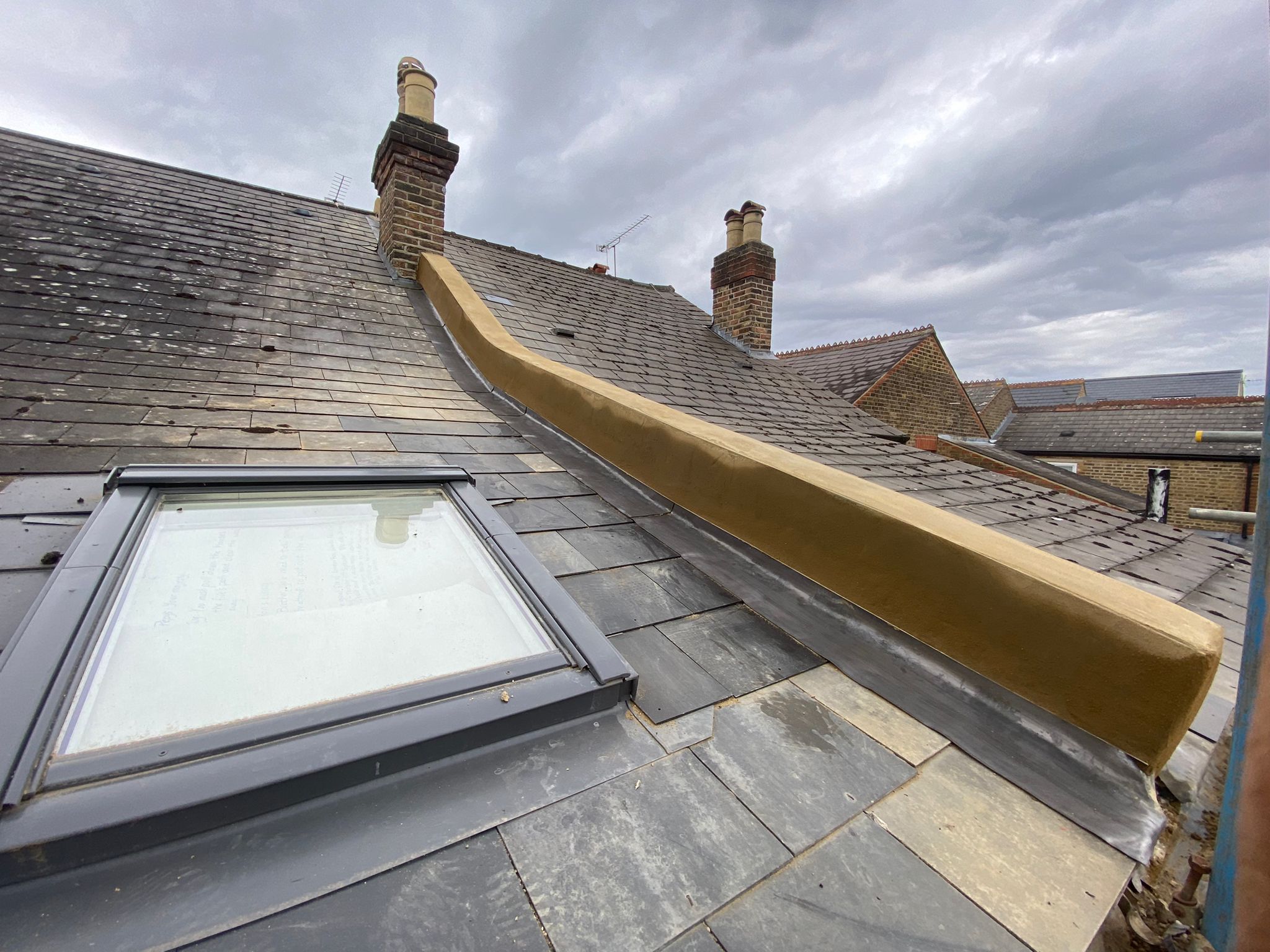
Chimney Stack Removal Costs: What You Are Actually Paying For
The price covers more than someone knocking bricks off the top of your house. Here is a realistic breakdown of what a typical stack-only removal involves in this area:
| Cost Element | Typical Range (Surrey / SW London) |
|---|---|
| Labour and dismantling | £600 to £1,200 |
| Scaffolding | £700 to £1,500 |
| Roof making good (tiles, lead, felt) | £400 to £800 |
| Waste disposal | £150 to £300 |
| Structural engineer (if required) | £500 to £900 |
| Building control fee | £200 to £400 |
| Total (stack only) | £1,500 to £3,000+ |
Prices at the higher end of these ranges reflect the cost of working in Greater London and the South East, where labour rates run 20 to 30 per cent higher than the national average according to Checkatrade pricing data.
If you are also removing the internal chimney breast, the job becomes structural and you will likely need RSJ steel beams to support any masonry left above. Add plastering, making good to floors and ceilings, and you are looking at a total project cost of £3,000 to £6,000 or more.
The Roof Making Good: Where Corners Get Cut
The most important part of a stack removal, and the part that is most often skimped on, is making the roof watertight after the stack comes down. What we tend to see when homeowners call us about damp following a previous job is that whoever removed the stack patched over the opening with a few replacement tiles and left it at that. Without proper lead flashing, a breathable membrane and correctly bedded tiles, water finds its way in within a season or two.
A decent job involves removing the old flashings, cutting the area back far enough to get a clean tile course, laying a membrane, and bedding new tiles to match. On older clay plain tile roofs common across Surrey, finding a match for the original tiles takes a bit more effort and occasionally adds cost, but it is worth doing properly.
If the flue is being left in place below the roofline, you also need to cap it correctly. An open, uncapped flue will pull in rainwater and allow moisture to travel down into the chimney breast. A ventilated capping tile or lead saddle is the right solution, not just a roof tile dropped in over the top.h load-bearing elements safely and effectively.
Building Regulations and the Party Wall Act
Removing a chimney stack above the roofline does not always require a full building regulations application. However, once you start removing masonry that runs through the structure of the house, building regulations become notifiable under Part A (structural integrity). You will need drawings, a structural engineer’s sign-off and a building control inspection.
Even for a stack-only removal, it is worth checking with your local authority if you live in a conservation area. Parts of Surrey and South West London, including areas within Richmond, Wandsworth, Merton and Kingston, have conservation areas where external alterations visible from the street may require planning permission. Listed buildings always require consent regardless of the scale of work.
The Party Wall etc. Act 1996 also comes into play on terraced and semi-detached houses where the stack sits on or close to a shared party wall. You are required to serve notice on your neighbour at least two months before work begins. If they appoint their own surveyor, you are responsible for their reasonable costs. Party wall matters typically add £500 to £1,000 to the overall cost of the job.
Does Removing the Stack Affect Ventilation?
It does, and it is one of the things that often gets overlooked. An unused chimney flue, even a blocked one, provides passive ventilation to the room below. Building Regulations Part F requires habitable rooms to have a minimum permanent ventilation opening of 8,000mm². When you remove or cap the chimney, you remove that ventilation path.
The fix is straightforward: an airbrick or trickle vent in the external wall, or a ventilation cowl fitted at the point of capping. What you do not want is a sealed flue with no airflow, particularly on the internal breast of an older property where residual moisture in the masonry needs somewhere to go. We see damp problems fairly regularly on houses where this step has been skipped.
Stack Only, Breast Only, or Both?
Not everyone needs to take the whole chimney out, and it is worth understanding the difference in scope before you commit.
| Scope | Typical Cost | When It Makes Sense |
|---|---|---|
| Stack above roofline only | £1,500 to £3,000 | Damaged or unsafe stack, no internal use |
| Stack removed, breast retained | £1,500 to £3,000 | Keeping the fireplace as a feature |
| Partial removal below roofline | £1,200 to £2,000 | Stopping leaks, no planning concerns |
| Full removal (stack and breast) | £3,000 to £6,000+ | Reclaiming room space, full renovation |
On a lot of the period properties we work on, the internal breast is structurally tied into the floor joists and the wall above. Removing it without the right support will cause movement in the structure above. If anyone quotes for removing an internal breast without mentioning structural support or building control, treat that as a red flag.omprehensive information about regulatory requirements for structural modifications.
How to Get a Reliable Quote
A quote for chimney stack removal should itemise scaffolding, roof making good, waste removal and any structural or compliance costs separately. If you receive a single-figure quote with no breakdown, ask the contractor to split it out. Scaffolding alone for a two-storey terrace in this area can run to £1,200, and if it is not included in the quote you will be dealing with a surprise invoice later.
Be clear about what finish you expect. Ask specifically whether new tiles will be laid to match the existing roof, whether code 4 or code 5 lead will be used for the flashing, and how waste bricks and rubble will be removed. Heavy masonry rubble needs a skip or at minimum a grab lorry, and the cost of that should be agreed upfront.
Final Thoughts
Chimney stack removal is a roof job as much as it is a structural one. The brickwork coming down is straightforward enough. What matters is what happens to the roof once the stack is gone, and whether the person doing the work understands lead flashing, tile matching and ventilation rather than just demolition.
For most properties in Surrey and South West London, a stack-only removal with scaffolding, proper roof making good and building control sign-off will come in between £1,500 and £3,000. Add the internal breast and you are into a different scope of work entirely.
A few things worth confirming before any work starts:
Need Help with Chimney Removal? Talk to one of our Professional Chimney Removal Experts today!
Frequently Asked Questions
How much does it cost to remove a chimney stack in the UK?
Most stack-only removals cost between £1,500 and £3,000. In Surrey and South West London, expect to be at the higher end of that range due to regional labour rates.
Do I need planning permission to remove a chimney stack?
Usually not, but if you live in a conservation area or a listed building you may need consent. Always check with your local authority before work starts.
Do I need building regulations for chimney stack removal?
If you are only removing the stack above the roofline and leaving the breast intact, building regulations may not be required. Once the breast is involved, the work becomes notifiable under Part A and you will need sign-off.
How long does chimney stack removal take?
A straightforward stack removal with scaffold and roof making good typically takes two to three days. More complex jobs involving party wall structures or full breast removal take longer.
Do I need scaffolding to remove a chimney stack?
In almost all cases, yes. Safe access to roof level is required and scaffolding is the correct way to provide it. Be cautious of any quote that does not include it.
What happens to the roof after the chimney stack is removed?
The opening left by the stack needs to be made watertight with a membrane, new tiles bedded to match the existing roof and lead flashing. This is a critical part of the job that should be itemised in any quote.
Can I just cap the chimney instead of removing it?
Yes. Capping with a ventilated cowl is a much cheaper option and suits properties where the stack is structurally sound but no longer in use. It will not resolve problems with a deteriorating stack.
What is the difference between a chimney stack and a chimney breast?
The stack is the external brickwork visible above the roofline. The breast is the internal masonry running through the rooms inside the house. They are connected but removing one does not mean removing the other.
Do I need a structural engineer for chimney stack removal?
For a stack-only removal you may not, but if the breast below is being retained or if the stack is on a shared wall, a structural engineer’s assessment is advisable and often required by building control.
What is the Party Wall Act and does it apply to chimney removal?
The Party Wall etc. Act 1996 requires you to give written notice to your neighbour before carrying out work on or near a shared wall. If your chimney stack sits on a party wall, the Act applies and you need to serve notice at least two months before work begins.
Will removing the chimney stack cause damp?
It can if the job is done poorly. An improperly capped or unventilated flue will hold moisture. The roof making good must be done properly and the remaining flue should be ventilated to allow air movement and drying.
Does removing a chimney stack affect the value of my home?
Removing a damaged or deteriorating stack rarely affects value negatively. Removing original period features like a Victorian fireplace and breast is a different matter and can affect buyer appeal on period properties.
Is chimney stack removal worth it?
If the stack is in poor condition and no longer in use, removal is often more cost-effective than repeated repairs. If the stack is structurally sound and part of a chimney you use or intend to use, repair and maintenance is usually the better route.
How do I know if my chimney stack is shared with my neighbour?
On terraced and semi-detached houses, the stack almost always sits on or close to the party wall and serves flues from both properties. A visual inspection from outside will give you a good indication, but a roofer or surveyor can confirm it.