

+44 7853 968135
Do I need planning permission to replace gutters?

Replacing gutters on your UK property typically doesn’t require planning permission, as most gutter replacements fall under permitted development rights. However, specific circumstances involving listed buildings, conservation areas, or significant alterations to your property’s appearance may require formal approval from your local planning authority.
Understanding the planning regulations surrounding gutter replacement helps homeowners avoid potential legal complications whilst ensuring their property improvements comply with local building standards. The distinction between routine maintenance and substantial modifications determines whether you’ll need to navigate the planning permission process.
Do You Need Planning Permission to Replace Gutters?
Most standard gutter replacements across the UK fall under permitted development rights, meaning homeowners can proceed without formal planning permission. This applies when you’re replacing existing gutters with similar materials, maintaining the same positioning, and preserving the property’s original character.
Planning permission becomes necessary when your gutter replacement significantly alters your property’s external appearance or involves structural changes. Properties in conservation areas, listed buildings, or those subject to Article 4 directions face stricter regulations that may require planning consent even for seemingly minor alterations.
Need some Support with your Fascia and Soffits? Speak with a member of our Professional Fascia and Soffits Team here
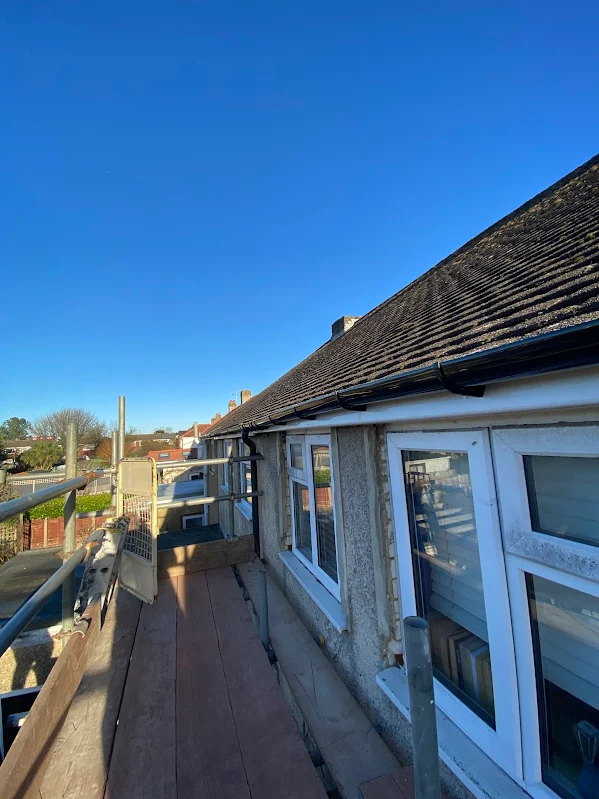
Can I Replace My Own Gutters?
DIY gutter replacement is legally permissible for most UK homeowners, provided the work complies with building regulations and doesn’t require planning permission. However, working at height carries significant safety risks, and improper installation can lead to water damage, structural issues, and invalidated insurance claims.
Professional installation ensures compliance with British Standards BS 6367 for drainage systems and provides warranties that protect your investment. Many homeowners underestimate the complexity of proper gutter alignment, fascia board assessment, and seamless joint creation that prevents future leaks and costly repairs.
Can I Change the Guttering Myself?
Changing your guttering system involves more complexity than simple replacement, particularly when switching between different materials or significantly altering the drainage configuration. While permitted development rights generally cover this work, you must ensure the new system effectively manages rainwater runoff without affecting neighbouring properties.
The UK government’s planning portal provides detailed guidance on permitted development rights and when planning permission becomes mandatory. Professional consultation helps navigate technical requirements whilst ensuring your DIY project meets building regulations and maintains your property’s structural integrity.
| Gutter Replacement Scenarios | Planning Permission Required |
|---|---|
| Like-for-like replacement | No |
| Listed building modifications | Yes |
| Conservation area changes | Potentially |
| Material colour changes | No (usually) |
| Size/position alterations | Potentially |
Are Gutters a Legal Requirement?
UK building regulations mandate effective rainwater drainage systems for all residential properties, making gutters legally required rather than optional. The Building Regulations 2010 specify that buildings must have adequate provision for rainwater disposal to prevent structural damage and protect public health.
Local authorities can serve enforcement notices requiring property owners to install or repair defective guttering systems that cause water damage to adjacent properties or public areas. The Environment Agency’s surface water management guidelines emphasise proper drainage as essential for flood prevention and environmental protection.
| Building Regulation Requirements | Compliance Standards |
|---|---|
| Rainwater disposal | Adequate capacity |
| Material specifications | BS standards |
| Installation quality | Professional grade |
| Maintenance access | Safe and practical |
| Environmental impact | Minimal runoff |
Planning Permission Requirements for Gutter Replacement Projects
Understanding when gutter replacement requires planning permission protects homeowners from potential enforcement action whilst ensuring property improvements enhance rather than diminish neighbourhood character. Most routine gutter maintenance and replacement work falls under permitted development rights, but specific property types and modification scales trigger planning requirements.
Listed buildings and properties within conservation areas face heightened scrutiny for external alterations, including gutter replacements that change materials, colours, or positioning. Local planning authorities assess whether proposed changes preserve historical character and architectural integrity, often requiring heritage impact assessments for approval.
The complexity increases when gutter replacement involves structural modifications, such as altering roofline drainage patterns or installing larger capacity systems that change the building’s external profile. These modifications may require both planning permission and building regulation approval to ensure structural safety and neighbourhood compatibility.
Need Help with Guttering? Talk to one of our Professional Guttering Experts today!
Frequently Asked Questions About Do I Need Planning Permission to Replace Gutters?
Do I need planning permission to replace gutters with different materials?
Generally no, replacing gutters with different materials like switching from plastic to cast iron doesn’t require planning permission under permitted development rights. However, listed buildings and conservation areas may have restrictions on material choices that require planning consent.
Can I replace gutters on a listed building without permission?
No, listed building consent is typically required for any external alterations including gutter replacement, even like-for-like changes. The local planning authority must approve materials, colours, and installation methods to preserve the building’s historical character.
What happens if I replace gutters without required planning permission?
The local planning authority may serve an enforcement notice requiring you to restore the original gutters or apply for retrospective planning permission. Failure to comply can result in prosecution and unlimited fines in magistrates’ court.
Do I need building regulations approval for gutter replacement?
Standard gutter replacement doesn’t typically require building regulations approval as it constitutes maintenance rather than construction work. However, significant alterations to drainage systems or structural modifications may need building control notification.
Can neighbours object to my gutter replacement?
Neighbours cannot object to permitted development gutter replacement, but they may raise concerns if water discharge affects their property. Planning applications for controversial gutter changes allow neighbour consultation and potential objections.
Are there restrictions on gutter colours in conservation areas?
Yes, conservation areas often have design guidelines restricting gutter colours to maintain neighbourhood character. Check with your local planning authority about approved colour palettes before purchasing replacement gutters.
Do I need permission to add gutter guards or leaf protection?
Gutter guards and leaf protection systems typically fall under permitted development as they don’t significantly alter the building’s appearance. However, large or prominent systems might require planning permission in sensitive locations.
Can I extend my gutter system without planning permission?
Minor extensions to existing gutter runs usually fall under permitted development, but significant extensions that alter drainage patterns or building appearance may require planning permission. Consult your local planning authority for guidance.
What documentation do I need for gutter replacement planning applications?
Planning applications for gutter replacement typically require site location plans, existing and proposed elevation drawings, material specifications, and heritage statements for listed buildings. Professional drawings ensure application completeness and approval likelihood.
How long does planning permission take for gutter replacement?
Standard planning applications take eight weeks for determination, while listed building consent applications require eight to thirteen weeks. Complex cases involving conservation areas or heritage considerations may take longer with additional consultation requirements.
Can I appeal if planning permission is refused for gutter replacement?
Yes, you can appeal planning permission refusals to the Planning Inspectorate within six months of the decision. Appeals examine whether the refusal was reasonable and whether the proposed gutter replacement complies with planning policies.
Are there different rules for commercial property gutter replacement?
Commercial properties face similar planning requirements to residential buildings, but larger scale alterations and business premises in prominent locations may face additional scrutiny. The Planning Portal’s commercial guidance provides specific advice for business properties.
Do I need planning permission to repair existing gutters?
Gutter repairs constitute maintenance work that doesn’t require planning permission regardless of property type or location. However, extensive repairs that effectively constitute replacement may need consideration under planning regulations for protected buildings.
What’s the difference between planning permission and building regulations for gutters?
Planning permission concerns the visual impact and appropriateness of gutter changes, while building regulations ensure structural safety and performance standards. Some projects require both approvals, while routine replacements typically need neither for most properties.