

+44 7853 968135
How long does it take to replace a flat roof in the UK?

Replacing a flat roof represents one of the most significant maintenance investments for UK property owners, with timing being a crucial factor in planning this essential work. The duration of flat roof replacement varies considerably based on multiple factors, from property size to weather conditions and chosen materials.
Understanding realistic timeframes helps homeowners plan effectively, arrange temporary accommodation if necessary, and budget for potential complications. Professional contractors typically complete standard residential flat roof replacements within 2-5 days, though larger or more complex projects may extend this timeline significantly.
How Much Does It Cost to Replace a Flat Roof in the UK?
The financial investment required for flat roof replacement in the UK ranges dramatically based on property size, material selection, and regional pricing variations. Standard residential properties typically see costs between £40-120 per square metre, with premium materials and complex installations pushing prices considerably higher.
Labour costs represent approximately 60-70% of the total project expense, making the choice of contractor particularly significant for budget-conscious homeowners. Additional expenses often include scaffolding hire, waste disposal, and potential structural repairs discovered during the replacement process, which can add £500-2,000 to initial quotes.
| Flat Roof Material | Cost Per Square Metre | Typical Lifespan | Weather Resistance |
|---|---|---|---|
| EPDM Rubber | £45-65 | 20-25 years | Excellent |
| Modified Bitumen | £40-60 | 15-20 years | Good |
| GRP Fibreglass | £60-90 | 25-30 years | Excellent |
| Built-up Felt | £35-50 | 10-15 years | Moderate |
| Liquid Membrane | £50-80 | 20-25 years | Very Good |
Need some Support with Flat Roofing? Speak with a member of our Professional Flat Roofing Team here
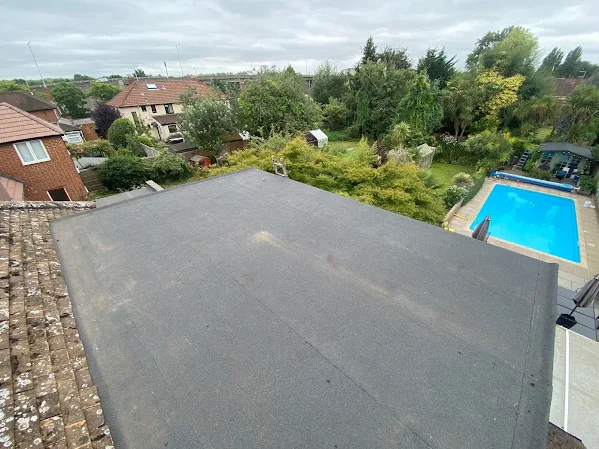
How Long Should It Take to Replace a Flat Roof?
Professional flat roof replacement typically requires 2-5 working days for standard residential properties, though this timeframe depends heavily on roof size, complexity, and weather conditions. Experienced contractors can often complete straightforward replacements more efficiently, whilst challenging installations involving structural repairs may extend well beyond typical durations.
The replacement process involves several distinct phases, each requiring adequate time for proper completion. Initial preparation and old material removal usually consumes the first day, followed by structural assessment and any necessary repairs, then new material installation and finishing work across subsequent days.
How Often Does a Flat Roof Need to Be Replaced in the UK?
Flat roof replacement frequency varies significantly based on material quality, installation standards, and maintenance practices, with most systems requiring replacement every 10-30 years. High-quality EPDM rubber and GRP fibreglass installations often exceed 25 years with proper maintenance, whilst traditional felt systems typically need replacement within 10-15 years.
UK weather conditions particularly challenge flat roof longevity, with frequent freeze-thaw cycles, heavy rainfall, and temperature fluctuations accelerating material deterioration. Regular maintenance and prompt repairs can extend roof life considerably, with well-maintained systems often reaching or exceeding manufacturer warranties.
| Property Type | Average Roof Size (m²) | Typical Replacement Time | Weather Dependency |
|---|---|---|---|
| Terraced House | 15-25 | 1-2 days | Moderate |
| Semi-detached | 25-40 | 2-3 days | Moderate |
| Detached House | 40-80 | 3-5 days | High |
| Small Commercial | 80-200 | 5-10 days | Very High |
| Large Commercial | 200+ | 2-4 weeks | Critical |
Can a Roof Be Replaced in One Day in the UK?
Single-day flat roof replacement is technically possible for very small residential properties under ideal conditions, though this compressed timeframe often compromises quality and thoroughness. Most reputable contractors avoid rushing installations, preferring to ensure proper preparation, material installation, and quality checks across multiple days.
Weather conditions play a critical role in single-day replacement feasibility, with dry, mild conditions being essential for successful completion. The UK government’s construction weather guidelines emphasise the importance of suitable conditions for roofing work, particularly regarding wind speeds and precipitation risks.
Emergency temporary repairs might be completed within a day, but complete replacement typically requires adequate time for each installation phase. Rushing flat roof replacement often leads to future problems, including poor waterproofing, inadequate adhesion, and premature failure requiring costly remedial work.
Factors Affecting Flat Roof Replacement Duration in the UK
Weather conditions represent the most significant variable affecting flat roof replacement timescales, with UK contractors often experiencing delays due to rain, high winds, or extreme temperatures. Professional roofers typically monitor weather forecasts carefully, scheduling work during stable conditions and maintaining flexibility for weather-related postponements.
Property accessibility also influences project duration, with difficult-to-reach roofs requiring additional scaffolding setup time and more complex material transportation. Structural complications discovered during old roof removal can extend timelines considerably, particularly when underlying timber damage or inadequate insulation requires attention before new installation can proceed.
The chosen replacement material significantly impacts installation time, with some systems requiring multiple application layers and extended curing periods. Modern single-membrane systems like EPDM often install faster than traditional built-up felt systems, though proper preparation remains crucial regardless of material choice.
| Delay Factor | Typical Time Impact | Mitigation Strategy | Season Dependency |
|---|---|---|---|
| Heavy Rain | 1-3 days | Weather monitoring | High (Oct-Mar) |
| High Winds | 0.5-2 days | Flexible scheduling | Moderate |
| Material Delivery | 1-7 days | Advance ordering | Low |
| Structural Repairs | 2-10 days | Pre-installation survey | Low |
| Permit Requirements | 5-30 days | Early application | None |
Planning permission requirements can also affect project timelines, particularly for listed buildings or properties within conservation areas. The UK government’s planning portal provides guidance on when planning permission might be required for roofing work, helping homeowners understand potential regulatory delays.
Key considerations for UK flat roof replacement timing include:
Need Help with Flat Roofing Matters? Talk to one of our Flat Roofing Experts today!
How Long Does It Take to Replace a Flat Roof in the UK: Frequently Asked Questions
How long does flat roof replacement take in winter months?
Winter flat roof replacement typically takes 30-50% longer than summer installations due to shorter daylight hours and frequent weather delays. Most contractors recommend scheduling major roofing work between April and October for optimal conditions and faster completion.
What factors can extend flat roof replacement beyond the estimated timeframe?
Structural damage discovery, adverse weather conditions, material delivery delays, and complex access requirements commonly extend replacement timelines. Additional complications like asbestos removal or planning permission requirements can add weeks to the original schedule.
Do different flat roof materials require different installation timeframes?
Yes, EPDM rubber membranes typically install faster than traditional felt systems, whilst GRP fibreglass requires longer curing times between application layers. Liquid-applied membranes may need multiple coats with drying time between each application stage.
How does roof size affect replacement duration in the UK?
Larger roofs require proportionally more time, with small residential roofs (under 30m²) typically completed in 1-3 days, whilst commercial installations exceeding 200m² may require several weeks. Complex roof shapes with multiple levels or penetrations also increase installation time significantly.
Can flat roof replacement work continue during light rain?
Most flat roof materials cannot be installed during precipitation, as moisture prevents proper adhesion and waterproofing. Professional contractors typically halt work during rain and may need additional drying time before resuming installation activities.
What preparation work affects flat roof replacement timing?
Old material removal, surface cleaning, structural repairs, and substrate preparation typically consume 30-40% of total project time. Thorough preparation is essential for long-term performance, making it unwise to rush these critical foundation stages.
How do building regulations impact flat roof replacement schedules?
Building control approval for structural changes or significant upgrades can add 2-4 weeks to project timelines. Most simple like-for-like replacements don’t require formal approval, though contractors should confirm compliance with current thermal efficiency standards.
What time of year offers the fastest flat roof replacement in the UK?
Late spring through early autumn (May-September) typically provides optimal conditions for fastest installation, with stable weather patterns and longer daylight hours. According to UK weather patterns, these months offer the most reliable conditions for roofing work.
How does contractor experience affect replacement duration?
Experienced specialists typically complete installations 20-30% faster than general builders whilst maintaining higher quality standards. Established roofing contractors also have better supplier relationships, reducing material delivery delays that can extend project timelines.
Can scaffolding requirements slow down flat roof replacement?
Scaffolding setup and removal can add 1-2 days to project duration, particularly for complex installations requiring extensive access platforms. However, proper scaffolding often speeds up the actual roofing work by providing safe, efficient access for materials and workers.
What emergency situations might require accelerated replacement timing?
Severe weather damage or sudden roof failure may necessitate emergency replacement, though quality should never be compromised for speed. Emergency temporary repairs can provide protection whilst planning proper replacement during suitable weather conditions.
How do multiple roof levels affect replacement timeframes?
Multi-level flat roofs with different heights and access points typically require 40-60% longer installation times than single-level installations. Complex drainage systems and material transitions between levels also add to overall project duration.
What role does waste removal play in replacement timing?
Old material disposal can add half a day to project duration, particularly for older roofs with multiple layers of felt or potential asbestos content. Proper waste separation and licensed disposal are legal requirements that contractors must factor into scheduling.
How does property location within the UK affect replacement speed?
Urban areas typically offer faster material delivery and contractor availability, whilst remote locations may experience delays for specialist materials and experienced contractors. Scottish Highland properties, for example, may face additional logistical challenges compared to London installations.
levitra price
levitra price
furosemide for dogs
furosemide for dogs
kamagra oral jelly
kamagra oral jelly
buy antibiotics online safely
buy antibiotics online safely
lasix generico
lasix generico
cialis pill dosage
cialis pill dosage
famotidine toddler dosage
famotidine toddler dosage
cialis 5mg coupons
cialis 5mg coupons
peak cialis effect
peak cialis effect
Sildenafil PK/PD Resource
Sildenafil PK/PD Resource